Showing posts with label Business. Show all posts

BELL FLIR 380-HD

Bell Helicopter has achieved Supplemental Type Certificates (STCs) for several retrofit features through its Aeronautical Accessories subsidiary, adding a list of capabilities for Bell 429 owners. Many of the new features add great safety benefits to the helicopter.
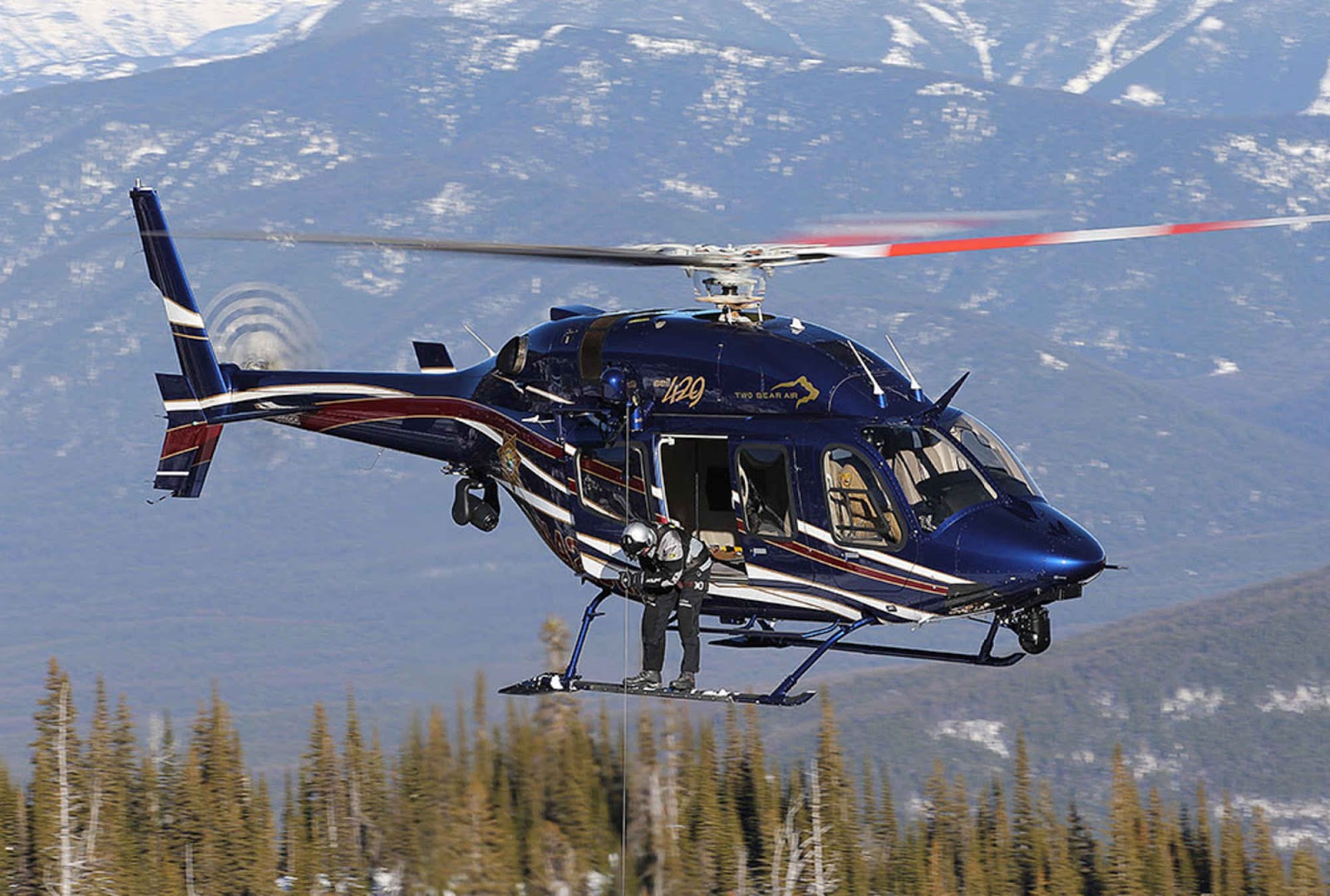


A new Forward Looking Infrared (FLIR) system, the FLIR 380-HD, can be added for $9,960, not including installation. The system is mounted under the nose of the Bell 429 and enhances vision at night or in low visibility conditions.


Another nice safety enhancement makes it easier for the occupants to find their way around the helicopter in case of an emergency. The Helicopter Emergency Egress Lighting System (HEELS) clearly identifies exits by adding LED light strips around the doors to allow occupants to find the exits quicker. The system is battery operated and engages automatically if the helicopter is immersed in water or experiences a force of 8G or more. The HEELS can also be turned on by the pilot. The kit costs $24,330.


Data recording capabilities have can been improved by adding the newly STC'd Micro QAR, which can be connected to the helicopter's flight data bus to record 320 hours of flight data onto a memory card. The data can be retrieved either by removing the memory card itself or through a built-in USB port. The Micro QAR costs $14,050.


A more extensive addition to the helicopter is a Fast Rope Kit, which allows operators to carry an additional 300 lbs of load per side externally. The $141,980 kit is comprised of telescoping tubes that extend and retract to allow for normal operation when they are not in use. The kit can also easily be attached or removed from the helicopter.


Operators can also add 25 lbs to the useful load of the helicopter through an STC that allows the operator to remove the co-pilot's seat. An additional STC allows for quick removal and reinstallation of the co-pilots tail rotor pedals. Removing the pedals during times when non-helicopter pilots occupy the seat enhances safety.


According: flyingmag.com

Diamond DA62 Certified in Europe

Diamond Aircraft has earned the type certificate for its DA62 piston twin from the European Aviation Safety Authority (EASA), allowing the model to go on sale in Europe immediately. FAA certification is expected in six to eight months.


EASA Executive Director Patrick Ky presented the certification to Diamond CEO Christian Dries at the AERO 2015 show in Friedrichshafen, Germany.

The $983,000 DA62 is a larger version of the DA42 twin powered by two 180 horsepower Austro AE330 diesel engines burning jet-A fuel.

The DA62 will be offered in two versions, a five-seater with an MTOW of 4,400 pounds, and a seven-seater with an MTOW of 5,070 pounds that will be targeted primarily to the U.S. market.

With a wingspan of 48 feet and a length of 30 feet, the DA62 is both wider and longer than the DA42. Its max speed of 201 ktas, meanwhile, is a significant improvement over the DA42's 177 ktas top speed.

According: flyingmag.com

Mooney Launches Diesel-Powered M10 Two Seater

After weeks of rumors surrounding a possible new airplane design from Mooney International, the recently resurrected legacy airplane manufacturer announced at Airshow China 2014 in Zhuhai that it is developing a line of two-seat airplanes named the M10 series.

The new series will start out with the M10T and M10J models, both powered by Continental diesel engines. Both will also feature the same sleek composite fuselage design with the trademark forward canted vertical stabilizer that makes identifying Mooney airplanes easy.

The M10T is targeted at the global training market. It will have fixed gear and a 135 hp Continental CD-135 engine. The M10J will be the top of the line of the series with retractable gear, a 155 hp CD-155 engine, and greater creature comforts than its sibling. If Mooney can live up to the targeted 170 knot cruise speed and 1,000 nm range that it has set for the M10J, this airplane could be a game changer.

The M10 series will be marketed globally, with an emphasis on the Chinese training market. Mooney declined to provide pricing information, saying only the the models will be “competitive.” The Kerrville, Texas, company, which was bought earlier this year by Chinese investors, did not announce where the M10T and M10J will be built.

The M10 name recalls the original M10 Cadet of the 1960s and 1970s, and is a direct follow on to the M20 series, which has spanned more than half the alphabet with various sizes and power plants. The M20TN Acclaim Type S is the fastest single-engine airplane currently in production.

According: flyingmag.com

Bell 407GX

Despite the widespread adoption of Garmin’s integrated avionics systems in a variety of airplanes from four-place piston singles to turboprops and business jets, never before has the company’s G1000 glass cockpit flown in a helicopter.

The conventional wisdom has always seemed to argue against shoehorning Garmin’s wide LCD flight displays into the tight confines of a small, Part 27 helicopter. I had to admit as I waited in the parking lot outside Orlando, Florida’s Orange County Convention Center for the arrival of Bell’s newest helicopter, the Model 407GX featuring the helicopter version of G1000, that I harbored those same doubts. Did the pairing of a midrange, light single-engine helicopter with G1000 flat-panel displays, each measuring 10.4 inches diagonally, really make sense? Wouldn’t a slimmed-down alternative — say, Garmin’s G500 avionics system — be a better fit in the 407?

I didn’t have to ponder these questions for long before a gleaming brown-and-gold 407GX swooped over the grass field at the parking lot’s edge and squatted down next to me. I climbed aboard and introduced myself to Randall Parent, a Bell demonstration pilot, who set about giving me a quick and dirty briefing on the G1000H package arrayed before us. (The H stands for helicopter, naturally.) There wasn’t much to say since the magic of G1000 can truly be appreciated only once airborne. But at first glance the pairing of the Garmin glass with the 407 seemed promising.

As we were preparing to depart and get our demo under way, the radio crackled, signaling the arrival of another helicopter, which settled onto the grass beside us. “Have you had a ride in the Bell 429 yet?” Parent asked, glancing over at the 407GX’s larger, pricier sibling nestled next to us. I had not. “It’s nice, but that’s a Cadillac,” he said. “This,” he announced, tightening his grip on the collective, “is a Corvette.”

With that, Parent smoothly lifted us off the ground and into a hover a few feet above the large white H painted on the grass. “There,” he said, pressing a button on his cyclic stick. “How’s that?” A full-color video image showing the view from the rear of the helicopter popped onto the LCD screen in front of me. Easing the cyclic toward him with slight, almost imperceptible pressure, Parent backed the helicopter out of its space.

“That’s a reassuring picture,” I said, impressed by the clarity of the video image, which had far better fidelity than those minivan and SUV rearview cameras I’ve seen.

“That,” he said, “is the kind of technology we’ve incorporated into the 407GX that I’m convinced will save lives.”

Parent stepped on the left pedal to turn as only a helicopter can, pivoting 180 degrees. He eased the cyclic forward and we gathered momentum, wooshing across the empty field outside the site of this year’s Heli-Expo Convention. As Parent initiated a brisk climb over the restaurants and tourist attractions along International Drive, I thought to myself, Disney World may be nearby but I was already aboard my own personal amusement park ride.

Accelerating to 140 knots, the 407GX’s impressive top speed, Parent went straight to work showing off the G1000H’s capabilities.

“There’s one of our guys now,” he said, referring to another Bell 407 just returning from a customer demo flight. “I’ll put our nose on him so you can see the traffic alert on the synthetic-vision system.”

Parent banked left toward the small diamond-shaped target that blipped across the MFD. Immediately on the Garmin G1000H primary flight display, a similar target appeared on our virtual view of the world, exactly where it should have been. A digitized voice announced, “Traffic!”

“That’s pretty hard to ignore,” he said.

Indeed it was. In fact, every function and feature of the Garmin avionics system that Parent demonstrated during our half-hour flight seemed perfectly suited to the helicopter. Even the displays themselves appeared to fit the space as if they’d been designed that way when the Bell 407 made its debut back in 1995.

Match Made in Mirabel
I was especially interested to experience the terrain-alerting functionality in G1000, which Garmin originally developed for airplanes and tweaked for helicopter use. Because fixed-wing aircraft typically fly higher and faster than rotorcraft, they must be programmed with a different underlying logic. But here again, the G1000H cockpit excelled in every situation, even as Parent slowed the 407GX and put us into a steeper than normal descent toward a cluster of tall buildings. Had we been flying in an airplane, the system’s TAWS would have issued a warning almost as soon as the nose dipped. Instead, we were allowed to continue our plunge until reaching a height and distance where safety could have been in question in low visibility or if a pilot’s attention were temporarily diverted. The HTAWS, Parent explained, can be set to three sensitivity levels, including being inhibited altogether with the simple push of a button on the cyclic.

The G1000’s displays are large, to be sure, but it was surprising nonetheless to see how well the screens fit the 407GX’s reshaped instrument panel. Bell certified the original Model 407 with conventional instruments, and will continue selling the helicopter in this configuration to customers who wish to forego making the technological sidestep into the 21st century. Some buyers will opt to stick with round dials in the 407, perhaps owing to the fact that they may already operate a fleet of Bell helicopters and therefore will wish to maintain cross commonality. But if the reaction of buyers at Heli-Expo in March was any indication, the vast majority of customers will choose the Garmin glass panels. Bell said it signed contracts for 11 Bell 407GXs at the show, versus just three for 407s with conventional instruments, and says it has sold another 30 GX models to an unnamed fleet customer.

Possibly the biggest surprise about Bell’s decision to bring a version of the Garmin G1000 avionics system to the 407 is that no other manufacturer had yet chosen to do the same thing. Introduced nearly a decade ago in the Cessna Citation Mustang, Garmin avionics have become a de facto avionics standard in everything from Cessna Skyhawks to Embraer’s Phenom light jets and, with the introduction of the touch-screen-controlled G5000 cockpit, even the superfast Cessna Citation Ten business jet.

It’s a mystery why no other helicopter manufacturer realized G1000 would make a perfect companion for rotorcraft. Credit goes to Bell for being the first to figure it out, and for getting it exactly right in the 407GX.

According: flyingmag.com

Comments system

Disqus Shortname