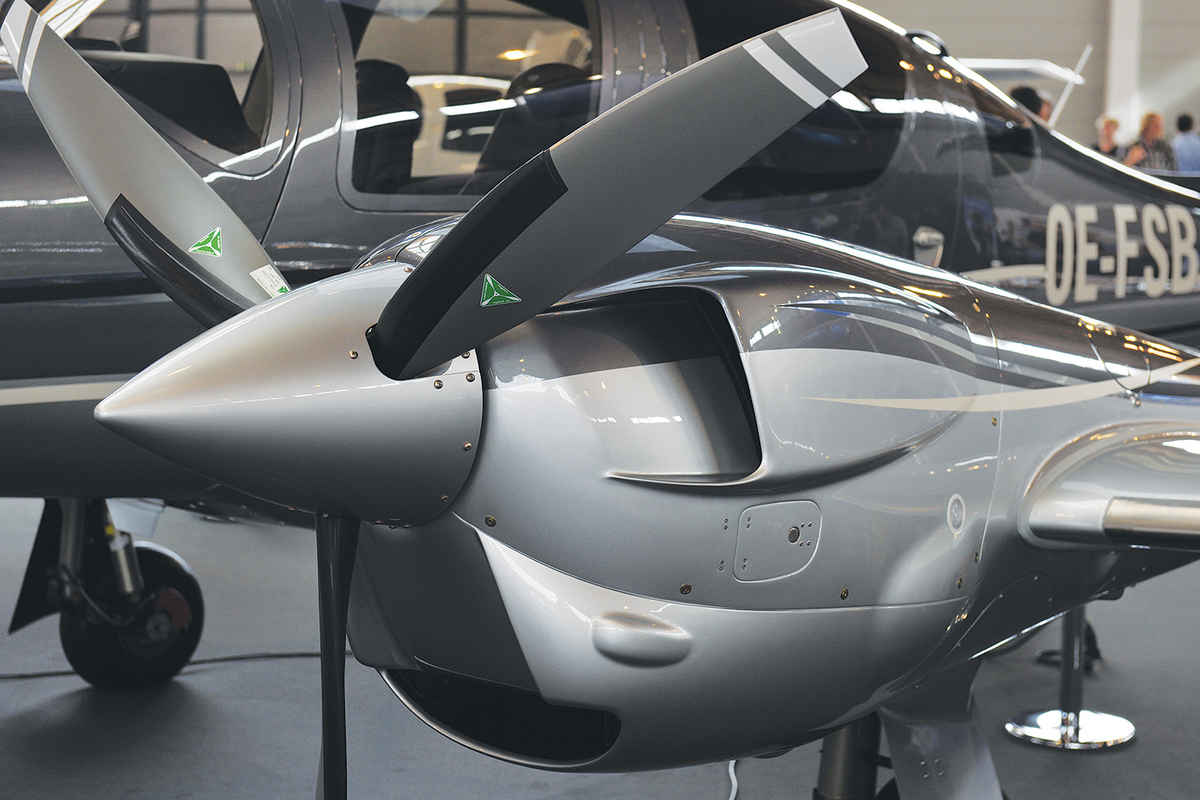
Showing posts with label Other. Show all posts

BELL FLIR 380-HD

Bell Helicopter has achieved Supplemental Type Certificates (STCs) for several retrofit features through its Aeronautical Accessories subsidiary, adding a list of capabilities for Bell 429 owners. Many of the new features add great safety benefits to the helicopter.
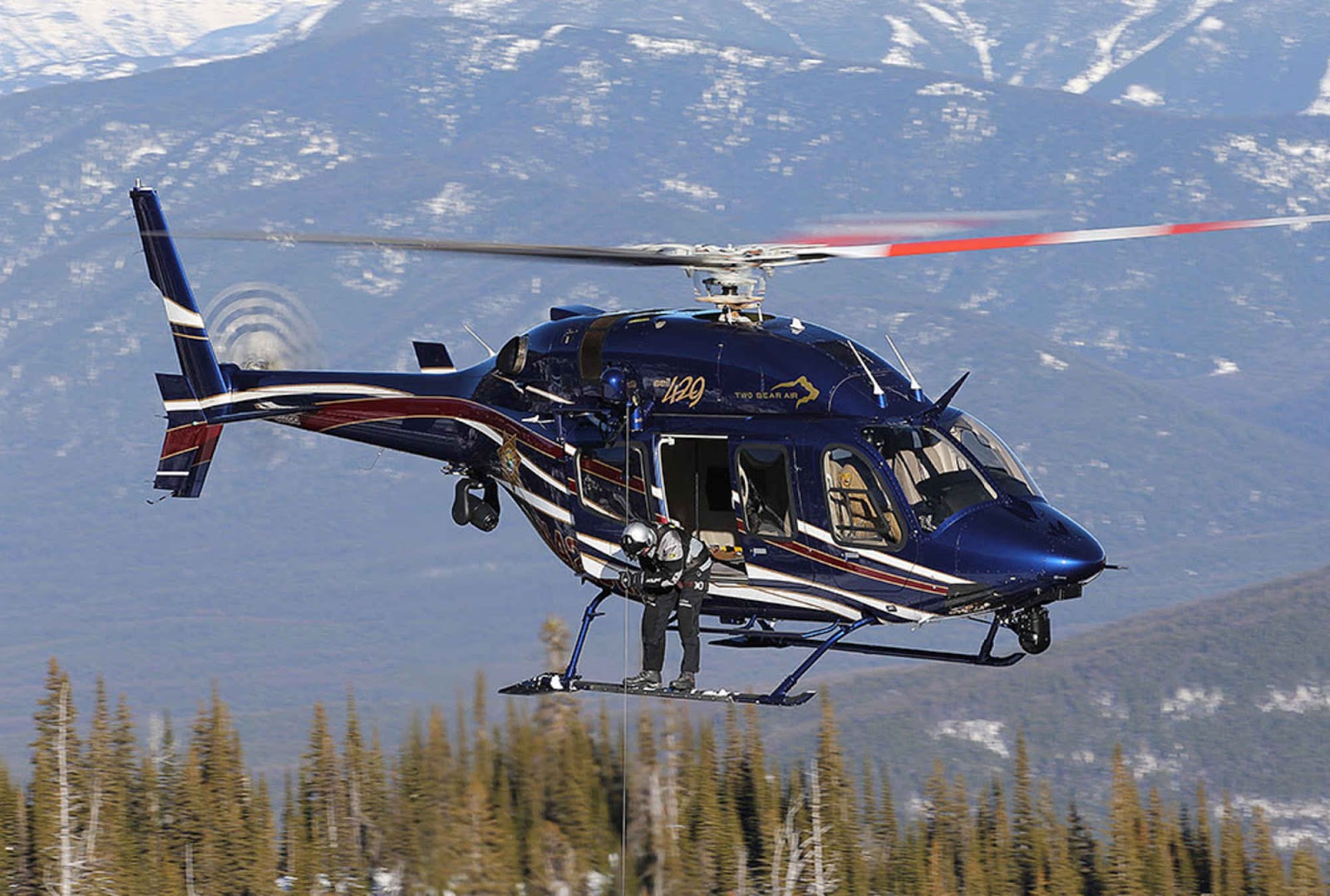


A new Forward Looking Infrared (FLIR) system, the FLIR 380-HD, can be added for $9,960, not including installation. The system is mounted under the nose of the Bell 429 and enhances vision at night or in low visibility conditions.


Another nice safety enhancement makes it easier for the occupants to find their way around the helicopter in case of an emergency. The Helicopter Emergency Egress Lighting System (HEELS) clearly identifies exits by adding LED light strips around the doors to allow occupants to find the exits quicker. The system is battery operated and engages automatically if the helicopter is immersed in water or experiences a force of 8G or more. The HEELS can also be turned on by the pilot. The kit costs $24,330.


Data recording capabilities have can been improved by adding the newly STC'd Micro QAR, which can be connected to the helicopter's flight data bus to record 320 hours of flight data onto a memory card. The data can be retrieved either by removing the memory card itself or through a built-in USB port. The Micro QAR costs $14,050.


A more extensive addition to the helicopter is a Fast Rope Kit, which allows operators to carry an additional 300 lbs of load per side externally. The $141,980 kit is comprised of telescoping tubes that extend and retract to allow for normal operation when they are not in use. The kit can also easily be attached or removed from the helicopter.


Operators can also add 25 lbs to the useful load of the helicopter through an STC that allows the operator to remove the co-pilot's seat. An additional STC allows for quick removal and reinstallation of the co-pilots tail rotor pedals. Removing the pedals during times when non-helicopter pilots occupy the seat enhances safety.


According: flyingmag.com

Diamond DA62 Certified in Europe

Diamond Aircraft has earned the type certificate for its DA62 piston twin from the European Aviation Safety Authority (EASA), allowing the model to go on sale in Europe immediately. FAA certification is expected in six to eight months.


EASA Executive Director Patrick Ky presented the certification to Diamond CEO Christian Dries at the AERO 2015 show in Friedrichshafen, Germany.

The $983,000 DA62 is a larger version of the DA42 twin powered by two 180 horsepower Austro AE330 diesel engines burning jet-A fuel.

The DA62 will be offered in two versions, a five-seater with an MTOW of 4,400 pounds, and a seven-seater with an MTOW of 5,070 pounds that will be targeted primarily to the U.S. market.

With a wingspan of 48 feet and a length of 30 feet, the DA62 is both wider and longer than the DA42. Its max speed of 201 ktas, meanwhile, is a significant improvement over the DA42's 177 ktas top speed.

According: flyingmag.com

Mooney Launches Diesel-Powered M10 Two Seater

After weeks of rumors surrounding a possible new airplane design from Mooney International, the recently resurrected legacy airplane manufacturer announced at Airshow China 2014 in Zhuhai that it is developing a line of two-seat airplanes named the M10 series.

The new series will start out with the M10T and M10J models, both powered by Continental diesel engines. Both will also feature the same sleek composite fuselage design with the trademark forward canted vertical stabilizer that makes identifying Mooney airplanes easy.

The M10T is targeted at the global training market. It will have fixed gear and a 135 hp Continental CD-135 engine. The M10J will be the top of the line of the series with retractable gear, a 155 hp CD-155 engine, and greater creature comforts than its sibling. If Mooney can live up to the targeted 170 knot cruise speed and 1,000 nm range that it has set for the M10J, this airplane could be a game changer.

The M10 series will be marketed globally, with an emphasis on the Chinese training market. Mooney declined to provide pricing information, saying only the the models will be “competitive.” The Kerrville, Texas, company, which was bought earlier this year by Chinese investors, did not announce where the M10T and M10J will be built.

The M10 name recalls the original M10 Cadet of the 1960s and 1970s, and is a direct follow on to the M20 series, which has spanned more than half the alphabet with various sizes and power plants. The M20TN Acclaim Type S is the fastest single-engine airplane currently in production.

According: flyingmag.com

Bell 407GX

Despite the widespread adoption of Garmin’s integrated avionics systems in a variety of airplanes from four-place piston singles to turboprops and business jets, never before has the company’s G1000 glass cockpit flown in a helicopter.

The conventional wisdom has always seemed to argue against shoehorning Garmin’s wide LCD flight displays into the tight confines of a small, Part 27 helicopter. I had to admit as I waited in the parking lot outside Orlando, Florida’s Orange County Convention Center for the arrival of Bell’s newest helicopter, the Model 407GX featuring the helicopter version of G1000, that I harbored those same doubts. Did the pairing of a midrange, light single-engine helicopter with G1000 flat-panel displays, each measuring 10.4 inches diagonally, really make sense? Wouldn’t a slimmed-down alternative — say, Garmin’s G500 avionics system — be a better fit in the 407?

I didn’t have to ponder these questions for long before a gleaming brown-and-gold 407GX swooped over the grass field at the parking lot’s edge and squatted down next to me. I climbed aboard and introduced myself to Randall Parent, a Bell demonstration pilot, who set about giving me a quick and dirty briefing on the G1000H package arrayed before us. (The H stands for helicopter, naturally.) There wasn’t much to say since the magic of G1000 can truly be appreciated only once airborne. But at first glance the pairing of the Garmin glass with the 407 seemed promising.

As we were preparing to depart and get our demo under way, the radio crackled, signaling the arrival of another helicopter, which settled onto the grass beside us. “Have you had a ride in the Bell 429 yet?” Parent asked, glancing over at the 407GX’s larger, pricier sibling nestled next to us. I had not. “It’s nice, but that’s a Cadillac,” he said. “This,” he announced, tightening his grip on the collective, “is a Corvette.”

With that, Parent smoothly lifted us off the ground and into a hover a few feet above the large white H painted on the grass. “There,” he said, pressing a button on his cyclic stick. “How’s that?” A full-color video image showing the view from the rear of the helicopter popped onto the LCD screen in front of me. Easing the cyclic toward him with slight, almost imperceptible pressure, Parent backed the helicopter out of its space.

“That’s a reassuring picture,” I said, impressed by the clarity of the video image, which had far better fidelity than those minivan and SUV rearview cameras I’ve seen.

“That,” he said, “is the kind of technology we’ve incorporated into the 407GX that I’m convinced will save lives.”

Parent stepped on the left pedal to turn as only a helicopter can, pivoting 180 degrees. He eased the cyclic forward and we gathered momentum, wooshing across the empty field outside the site of this year’s Heli-Expo Convention. As Parent initiated a brisk climb over the restaurants and tourist attractions along International Drive, I thought to myself, Disney World may be nearby but I was already aboard my own personal amusement park ride.

Accelerating to 140 knots, the 407GX’s impressive top speed, Parent went straight to work showing off the G1000H’s capabilities.

“There’s one of our guys now,” he said, referring to another Bell 407 just returning from a customer demo flight. “I’ll put our nose on him so you can see the traffic alert on the synthetic-vision system.”

Parent banked left toward the small diamond-shaped target that blipped across the MFD. Immediately on the Garmin G1000H primary flight display, a similar target appeared on our virtual view of the world, exactly where it should have been. A digitized voice announced, “Traffic!”

“That’s pretty hard to ignore,” he said.

Indeed it was. In fact, every function and feature of the Garmin avionics system that Parent demonstrated during our half-hour flight seemed perfectly suited to the helicopter. Even the displays themselves appeared to fit the space as if they’d been designed that way when the Bell 407 made its debut back in 1995.

Match Made in Mirabel
I was especially interested to experience the terrain-alerting functionality in G1000, which Garmin originally developed for airplanes and tweaked for helicopter use. Because fixed-wing aircraft typically fly higher and faster than rotorcraft, they must be programmed with a different underlying logic. But here again, the G1000H cockpit excelled in every situation, even as Parent slowed the 407GX and put us into a steeper than normal descent toward a cluster of tall buildings. Had we been flying in an airplane, the system’s TAWS would have issued a warning almost as soon as the nose dipped. Instead, we were allowed to continue our plunge until reaching a height and distance where safety could have been in question in low visibility or if a pilot’s attention were temporarily diverted. The HTAWS, Parent explained, can be set to three sensitivity levels, including being inhibited altogether with the simple push of a button on the cyclic.

The G1000’s displays are large, to be sure, but it was surprising nonetheless to see how well the screens fit the 407GX’s reshaped instrument panel. Bell certified the original Model 407 with conventional instruments, and will continue selling the helicopter in this configuration to customers who wish to forego making the technological sidestep into the 21st century. Some buyers will opt to stick with round dials in the 407, perhaps owing to the fact that they may already operate a fleet of Bell helicopters and therefore will wish to maintain cross commonality. But if the reaction of buyers at Heli-Expo in March was any indication, the vast majority of customers will choose the Garmin glass panels. Bell said it signed contracts for 11 Bell 407GXs at the show, versus just three for 407s with conventional instruments, and says it has sold another 30 GX models to an unnamed fleet customer.

Possibly the biggest surprise about Bell’s decision to bring a version of the Garmin G1000 avionics system to the 407 is that no other manufacturer had yet chosen to do the same thing. Introduced nearly a decade ago in the Cessna Citation Mustang, Garmin avionics have become a de facto avionics standard in everything from Cessna Skyhawks to Embraer’s Phenom light jets and, with the introduction of the touch-screen-controlled G5000 cockpit, even the superfast Cessna Citation Ten business jet.

It’s a mystery why no other helicopter manufacturer realized G1000 would make a perfect companion for rotorcraft. Credit goes to Bell for being the first to figure it out, and for getting it exactly right in the 407GX.

According: flyingmag.com

Flight Design’s C4 Nears First Flight


The development team at German airplane manufacturer Flight Design is getting ready for a significant milestone in its four-seat airplane program, named the C4. Flight Design USA’s president Tom Peghiny said the composite airplane is expected to take to the skies for the first time by the end of the month.

Members of a technical team from Flight Design recently gathered at Continental Motors’ headquarters in Mobile, Alabama, for a weeklong session to get educated about the intricacies of the Continental IO-360-AF engine that Flight Design selected to power the C4. Like the airplane itself, the engine is in the process of certification, which Continental expects to have in hand by year-end. While the IO-360-AF will be rated to 210 horsepower, the version that will be installed in the C4 will produce up to 180 horsepower at 2,650 RPM, said Rhett Ross, president of Continental Motors.

The letters AF in the engine designation stands for alternative fuel. The engine is not designed for diesel fuel, but can be operated on leaded or unleaded fuels meeting the UL91 spec or higher. Flight Design plans to offer the C4 with a diesel engine option as well.

Anticipating the Part 23 rewrite, Flight Design selected an avionics package by Garmin named the Vision Touch. The system combines the certified GTN 750 GPS/navcom and GNC 255 navcom with the experimental G3X Touch PFD and MFD to take some cost out of the panel. Flight Design hopes to keep the price of the C4 below $250,000.

The plan was for the Vision Touch to be certified along with the airframe under the new regulations, but with the Part 23 rewrite now delayed by two years, we asked Peghiny whether Flight Design would reconsider its avionics selection.

“The plan for the avionics is the same currently as EASA has indicated it will allow the CS-23 certification of the G3X Vision Touch under ELA along with the airframe,” Peghiny said. “We believe the FAA will accept this under reciprocity with supplemental testing.”

According: flyingmag.com

Robinson R66 Floats Certified


Torrance, California-based Robinson Helicopter has achieved FAA certification for inflatable floats for its turbine-powered R66 — an option named the R66 Turbine Marine. The floats were primarily added for emergency purposes in case of a forced landing while flying over water.

While primarily designed for emergency use, the floats are approved for water takeoffs during day operations only at weights below 2,200 pounds. The R66 Turbine Marine uses the same float tubes as the R44 Clipper, adding 65 pounds to the helicopter's empty weight.

The floats are attached to the landing gear skids and are activated through a lever on the collective. Once deployed, the floats inflate in 2 to 3 seconds, Robinson says. With the floats inflated, the Vne is reduced to 80 KIAS. Vne with the floats stowed is 130 KIAS, down from 140 KIAS in the standard version. The floats are stowed along the landing gear skids inside streamlined protective covers to minimize drag.

The cost for the R66 Turbine Marine is $875,000. Robinson is not offering retrofit options for the float system.

According: flyingmag.com

More Than a Pretty Face


The cowling surrounding a reciprocating engine is a sophisticated aerial garbage disposal. Its job is to throw away about $1.50 out of every $6 you spend on avgas.

Gasoline contains more energy per pound than TNT, but engines turn only about a quarter of that energy into useful power. What happens to the rest? It dribbles off as waste heat, to be absorbed by the atmosphere. Half blows out the exhaust pipe; some of that, however, can be harvested and put to good use by a turbocharger. The remaining quarter heats up the engine and its accessories. If the engine were uncooled it would become very hot indeed; gases get up to 3,000 degrees Fahrenheit and more in the combustion chamber. Aluminum begins to lose strength at around 500 degrees, however, and so it's imperative to carry off the combustion heat to keep cylinder head temperatures at a safe level — preferably around 375 degrees. The job of the cowling is to dispose of that heat at the lowest possible cost in drag.

In the early days of aviation, the finned cylinders of air-cooled engines and the big radiators of liquid-cooled ones simply hung out in the wind. That's how the J-3 Cub did it, and countless radials as well. The drag penalty was horrible, but the airplanes were so slow that people seem to have been willing to look the other way rather than retch at the sight.

Designers understood, however, even well before the genesis of the Cub, that a streamlined duct with suitably sized inlet and outlet could greatly reduce the drag of a radiator or an engine. And that is what a modern cowling is: a duct.

A cowling admits only as much air as is required, and then makes sure that all of that air touches the hot parts of the engine. The space inside it is divided into two compartments or plenums, a "high pressure" plenum or "cold side" and a "low pressure" plenum or "hot side." Between the two is the engine. Baffles — guides and barriers of thin sheet metal between the cylinders and between the engine and the inner surfaces of the cowling — force all of the cooling air to flow where it's needed.

In principle, cold air coming into the inlets spreads out and slows down in one plenum — usually on top of the engine — where its velocity is converted into pressure. The elevated pressure in turn forces the air down through the comblike cylinder fins, where it temporarily speeds up, and into the other plenum, where it again slows down and spreads out before being vented overboard.

The prevalent arrangement, in which air moves downward through the engine, is called "downdraft"; a few airplanes, notably the later Aero Commanders, various Rutan-­designed homebuilts and, less notably, my own Melmoth 2, have used updraft cooling, venting the air from the top of the nacelle or cowling. Although various reasons can be found for selecting one arrangement or the other, one forceful argument involves nothing more dignified than dirt. The cooling air inevitably carries with it some oil mist and general engine dreck. For singles and low-wing twins, you prefer the dirt and staining to be kept out of sight, and so vents at the bottom of the cowling are the natural choice (unless you have a better idea, as I thought I did).

The word plenum adds dignity to a very simple idea. A plenum is a settling chamber in which air comes to rest after entering at high velocity. In principle, the dynamic pressure of the incoming air becomes static pressure inside the plenum, just as air entering the Pitot tube raises the pressure inside the airspeed indicator. Unfortunately, this conversion entails losses, and they contribute to the aerodynamic drag of the cooling process.

The passage through which air enters a plenum is called a "diffuser." In order to convert velocity into pressure with a minimum of loss, a diffuser must expand quite gradually and must therefore be very long. There is not enough space in any cowling for a perfect diffuser or even a moderately good one, and so many cowlings, especially older ones, dispense with a diffuser altogether, admitting air through holes with short, sharp-edged inner lips. A certain amount of potential pressure recovery is sacrificed, but there is still plenty to force cooling air through the cylinder fins.

Cooling air is needed at more ­places than just the cylinders. Oil, passing through a radiator, carries off two-thirds as much heat as the cylinders do, much of it picked up from the undersides of the pistons. Accessories like magnetos and alternators, which in typical installations are located on the downstream — that is, hot — side of the baffles, may need blast tubes squirting air at them from the colder high-pressure side. On turbocharged airplanes, radiators — commonly called "intercoolers," though sticklers for proper usage prefer "aftercoolers" — may be used to carry off some of the heat that results from the turbocharger compressing the induction air.

It's difficult to design a single set of fixed inlets and outlets that allows enough air through to cool the engine on a slow climb on a hot day but does not overcool it while cruising at altitude. Instead, adjustable ramps — "cowl flaps" — on the outlets from the cowling are used to regulate the flow. Only as much air as can go out can come in, and so the lips of the air inlets are rounded to allow excess air to spill over them smoothly, like water over the rim of an overflowing jar, when the exit area is throttled down by closing the cowl flaps.

Writers discoursing upon engine cooling often state that it is responsible for "as much as [fill in any number] percent of the total drag of the airplane." I have seen numbers ranging from a low of 5 to a high of 35 percent. Naturally, the cleaner the airframe and the more powerful the engine, the greater the proportion of the total drag that will be due to cooling.

On the other hand, it has occasionally been claimed that cooling can produce negative drag. I recently had occasion to edit the Wikipedia article — any idiot can — on a skimpy 1920s radial-engine cowling called a Townend Ring to challenge the preposterous claim that it produced thrust. The same claim was made, more plausibly, for the cooling system of the P-51 Mustang. The idea is that, like the combustor of a jet engine, the hot radiator expands the cooling air, increasing its velocity through the outlet. Since the same mass goes out as comes in, an increase in exit velocity would result in a forward thrust. It's questionable, however, whether enough thrust can be generated, given the relatively small heat rise in the cooling air, to overcome the internal resistance of the duct and radiator. Disagreements about this point simmered for years after the war, and when I interviewed several veterans of Mustang development at North American 16 years ago some residual heat was still detectable.

In recent years, as a result of studies conducted by S.J. Miley of Mississippi State in the 1970s, there has been a great trend toward replacing D-shaped inlets crowding the spinner with widely separated round ones. These clean up flow considerably and take better advantage of the propeller slipstream. Like many other innovations, this one was first adopted by agile amateur builders, who came up with some cowlings with remarkably tiny air inlets. The California builder of a 225-knot RV-4, Dave Anders, manages to cool his souped-up Lyc 360 with 30 square inches of inlet area — less than half the expected amount. I don't know how he manages it, but it shows that there's still a lot of room for improvement in cowling design.

According: flyingmag.com

Quest Aircraft Posts Record Year


Quest Aircraft delivered 30 Kodiak turboprop singles last year, posting its strongest year since certifying the utility airplane in 2007.

Last year also saw the Sandpoint, Idaho, start-up manufacturer achieve several milestones, including the certification of a new interior, new avionics, FAA approval for a TKS Tank installation in the Kodiak's cargo pod, and an increase in the airplane's landing weight.

"We continue to enhance the Kodiak as well as offer new options based on our own market knowledge and the feedback our customers provide," said Steve Zinda, Vice President of Sales and Marketing. "The enhancements we made in 2014 provide Kodiak operators with even more reliability and versatility, and we continue to work to provide additional performance and feature upgrades that appeal to a broad range of users."

In September, Quest received FAA approval for the integration of the Garmin GFC 700 Automatic Flight Control System (AFCS) in the G1000-equipped Kodiak. Earlier in the year, the company received certification of the new Summit Executive interior. The top-of-the-line five-place interior features club seating, two fold-out tables and two easy-access storage cabinets.

The Kodiak can seat up to 10 in its utility interior. Powered by a Pratt & Whitney Canada PT6, the STOL airplane is capable of taking off in under 1,000 feet and climbing 1,300 feet per minute.

According: flyingmag.com

Seeker Goes On Sale in America


The Seeker, a light utility airplane born in Australia in the early 1990s, has gained U.S. type certification allowing it to finally go on sale here in America.

If you've never heard of the Seeker you're probably not alone. A two-seat, high-wing taildragger with the engine mounted high behind the cabin, it's an odd bird. In Australia it's long been known as the Seabird Seeker, built and sold by Seabird Aviation Australia.

With exceptional visibility and penny-pinching economics, it's billed as a cost-effective alternative to a helicopter. And if you don't need vertical takeoff and landing capability, there's an argument to be made that the Seeker is just about the perfect alternative to a rotorcraft.

Seekers have been flying in limited numbers in the United States as sales demonstrators and with government entities, and now you too can own one after Seeker Aircraft America completed FAA validation flights allowing them to be shipped here, reassembled and sold as Part 23 certified airplanes.

Two versions will be offered in the U.S. market, the Seeker SB7L-360A and higher horsepower SB7L-360A2, both powered by Lycoming IO-360 engines.

With nearly seven hours of flight endurance and a stall speed of 48 knots, Seeker Aircraft America is hopeful this unique airplane can find a ready home in this country.

According: flyingmag.com

Diamond DA62 To Debut at NBAA Convention


Diamond Aircraft's DA62 diesel twin will make its North American debut later this month at the NBAA Convention in Las Vegas, where the Austrian light plane maker is also planning a "relaunch" party of sorts for the brand after a few relatively quiet years with a somewhat diminished U.S. profile.

That's all changing with the seven-seat DA62, a drop-dead-gorgeous, 200-knot speedster that has been tailor-made for U.S. buyers as a step-up product from high-end piston singles.

Diamond has eschewed having a major presence at U.S. shows ever since the demise of its D-Jet single-engine jet project, which led to layoffs at the company's facility in London, Ontario.

Now Diamond says the time is right for a major North American market expansion. The company is rolling out new financing, service and support options for North American buyers, as well as a new Diamond certified pre-owned program. At NBAA, Diamond will also display the diesel DA40NG Tundra with oversize tires and a beefier structure, as well as the DA42-VI four-seat diesel twin.

The all-new DA62, priced just north of $1 million, occupies a spot in the market between the Piper Seneca and Beech Baron G58. Flying recently traveled to the Diamond factory in Austria to fly it. You can read all about the airplane in our exclusive cover story in the December issue, which hits newsstands soon.

According: flyingmag.com

We Fly: Diamond DA62


A case can be made that the twin-diesel DA62 from Austria’s Diamond Aircraft represents a new pinnacle in piston aircraft design. Its long list of positive attributes includes superb efficiency, quality construction, technological sophistication and aesthetic appeal from every angle. With so much going for it, there’s little question this is an airplane that belongs on the shortlist of the greatest light twins ever. In a word, it’s a winner.

It's a pity, however, that so few people are expected to buy it. Don't blame Diamond for that. Light-piston twin sales have been so slow for so long that most aircraft buyers — and aviation writers — have written off the segment as all but dead. And no wonder. There aren't nearly as many pilots hanging around airports today who will tell you they need a twin. That's mainly a byproduct of the rise of high-performance piston singles like the Cirrus SR22 and Cessna TTx, which can do pretty much everything a twin can but with substantially reduced operating costs and essentially no ­safety penalty.

With a single, obviously, there's only one engine to care for, and the chances of it quitting are low — and if it does quit in the Cirrus, there's a full-airframe parachute to save the day.

That's what makes the emergence of an all-new light-piston twin in this class something of a surprise. With the elegantly sculpted DA62's arrival amid a field of brawny gasoline-powered ­singles, suddenly we have to ask ourselves if the market for twins isn't quite as dead as we thought. Perhaps it has merely been in a state of prolonged hibernation, slumbering peacefully through a long winter, awaiting the arrival of a new kind of light twin, one that can do more with less.

In developing this airplane, Diamond Aircraft founder and CEO Christian Dries challenged his team to create a simple-to-operate, fuel-efficient twin and wrap it around a passenger compartment mimicking the latest luxury SUVs.
Still, it's not quite time to announce a comeback for the piston twin segment. The DA62 is an anomaly, an outlier. After all, most pilots coming up through the ranks today who aren't dreaming of an airline career feel no pressing urge to “move up” to a twin. Those who used to — the pilots who flew twin-engine bombers in World War II and trusted two engines more than one — have all but stopped flying and, for the most part, offering advice to younger pilots.

The resulting shift in attitudes and buying habits in favor of single-engine airplanes is clear. In the late 1970s, for example, there were 33 different piston twins on the market. Today, there are only five serious contenders — and apart from the seven-place DA62, only two of these, the Beech Baron G58 and Piper Seneca V, offer more than four seats.


A Flying SUV
Seven seats in a twin in this class, by the way, is quite an engineering feat. I'm not a fan of describing any airplane as an “aerial SUV” — even if, yes, it's roomy inside and has a decent payload — because the label is almost always an exaggeration dreamed up by someone in the marketing department. But in the case of the DA62 it would be ignoring a glaringly obvious design characteristic not to mention it. With its third-row seating option, oversize doors and seats that fold flat to accommodate bulky items, there's no other way to say it — the DA62 is a sport utility vehicle with wings.

That's no accident. In developing this airplane as an evolutionary step up from the four-seat DA42, Diamond Aircraft founder and CEO Christian Dries challenged his engineering team to create a safe, simple-to-operate, fuel-efficient twin and wrap it around a passenger compartment mimicking the latest luxury SUVs. Unlike gas-guzzling sport utility vehicles, though, the DA62 boasts outstanding fuel economy. Its twin 180-horsepower Austro AE330 diesel engines burn less than 10 gallons per hour per side at maximum continuous power, propelling the airplane to a top speed of right around 200 knots. Pull the throttles back to 75 percent power and the speed is still a respectable 187 ktas, but fuel burn drops to just 7.4 gph per side — an impressive 14.8 gph total that's lower than a number of light-piston singles can manage on one engine.


I had the chance to spend a couple of days flying the DA62 recently on a visit to the Diamond Aircraft factory at the company-owned Wiener Neustadt East Airport south of Vienna. I came away from the experience persuaded that, for the right buyer, this is very nearly the ideal airplane. If, for example, you need seven seats versus the five or six offered in competing airplanes, the DA62 makes perfect sense. If you also don't have access to a ready supply of 100LL avgas, the DA62 is a great alternative to gasoline-powered models. And if you simply feel more comfortable flying over inhospitable terrain or water, sometimes at night, and desire the power and systems redundancy that come with a second engine, the DA62 should absolutely be on your shopping list.

There are other reasons to like the DA62 as well. One of the characteristics that left an impression on me is how dirt simple this airplane is to operate. Take the engine start procedure, for example. It involves the easy-as-pie steps of hitting the master switch, flipping the engine master on, waiting a moment to ensure the glow plug annunciation is out and then pushing the engine start button. That's it. The ­Austro diesels come to life in an instant as the dual-channel full authority ­digital engine controls (fadec) manage rpm and continuously check for faults while your only other job is to glance at the oil pressure indication. As long as the gauges are in the green, you're good to go.

The before-takeoff run-up procedure is equally as stress free. It involves setting the parking brake, manually selecting the A and B channels of the electronic engine control units (EECU) to ensure both are online, and then pushing and holding the engine run-up buttons. Here's where the magic starts as the AE330's fadec computers automatically increase power to 1,950 rpm and perform a number of health checks, including cycling the props. The throttles never physically move and there aren't any prop levers to move in the first place. If no fault messages ­appear on the Garmin G1000 primary flight display when the test sequence is completed, you're ready for departure.

In this case, that meant swinging the airplane onto Wiener Neustadt's Runway 10 with a 25-knot direct crosswind blowing from the left. I added a fistful of that smooth diesel power and, per the book, rotated at 80 knots. Acceleration to 95 knots for the climb-out was brisk as I began the bizarre sequence of noise-abatement twists and turns designed to keep air traffic away from residential areas as well as a military airfield right next door to the airport.


Climbing to 5,000 feet at 110 kias, the DA62 maintained a 1,450 fpm rate of climb at our midweight with two on board and half fuel. Accelerating to a cruise climb speed of 128 kias produced a 1,200 fpm rate through 8,000 feet. That's when I asked my host in the right seat, Diamond Aircraft director of flight operations Martin Scherrer, for a demonstration of the DA62's single-engine performance. Still climbing, at his direction I flicked off the left engine master switch (the left is the critical engine in the DA62). The ­propeller immediately stopped, automatically feathering as it did so.

The airplane lurched left as a result of loss of thrust on that side, and I instinctively raised the left wing, stepped on the rudder, and then dialed in rudder trim to compensate. After that, the airplane was as easy to fly on one engine as on two. Earning a multiengine rating in a DA62 with its two power levers (opposed to the usual six levers found in most piston twins) would almost be cheating, I decided. I let the speed come back to the 87-knot blue line (single-engine best rate-of-climb airspeed) and was impressed to see us still climbing at 450 fpm.

Speed Test
Next I wanted to evaluate the DA62's cruise performance to see if this really is a 200-knot airplane as Dries originally envisioned. I leveled off at 14,000 feet with the throttles pushed full forward to max continuous power of 95 percent and let the speed build. On this day, slightly warmer than standard and a little lower than optimal, I managed to coax 195 ktas from those twin AE330s while burning 18.6 gph. Hitting 200 knots in a Beech Baron in similar conditions would result in a fuel consumption of around 30 gph, so I wasn't terribly disappointed with the results I was seeing.

I tried out a variety of power settings and found what I considered a sweet spot at 60 percent power showing 170 ktas and 11.8 gph fuel consumption. After heading lower and trying a series of steep turns and power-on and -off stalls (which were, predictably, nonevents with nothing more dramatic than a slight wing drop in the stalls), I shut down the right engine for some engine-out maneuvering. Here's where the economy really improved. Loafing along at 100 knots in level flight we were showing a fuel burn of an eye-popping 3.6 gph. I did a quick mental calculation and realized that, even with less than half fuel on board, at this rate our flight endurance would still be more than 11 hours.

There would be virtually no way to stave off boredom on such a long flight, in part because the pilot doesn't have much to do in the DA62 in cruise. By design, pilot workload is low in all flight regimes, something I think nonprofessionals will come to greatly ­appreciate. Even performing aerial engine restarts is an almost total no-brainer for the pilot. The single-lever power controls don't require any special adjustments, meaning all the pilot has to worry about is maintaining the proper airspeed so the prop will ­windmill back to life when the engine master is switched back on.

In fact, fitted as it is with the latest generation of Garmin G1000 avionics with synthetic-vision technology (SVT) and electronic stability and protection (ESP), plus a three-axis Garmin GFC 700 autopilot and GWX 70 weather radar, there's an argument to be made that the DA62 is the among the most capable and easiest-to-fly piston airplanes ever produced. It's a 21st century technological marvel wrapped in a slippery and sensual ­carbon-fiber package.

After a sightseeing detour through some breathtakingly gorgeous valleys in the Alps southwest of Vienna (where handling in the bumps was rock solid), we headed back to Wiener Neustadt so I could try my hand at landings in the DA62. The wind was still blowing at 20 knots for my first arrival, which involved flying the strangest pattern I've ever performed as I was compelled to wheel around small towns at odd altitudes to accommodate for departing traffic and the bordering military airspace.

The landing culminated with a tight descending turn at the edge of the adjacent military airfield as I targeted 90 knots on final with full flaps selected. Max demonstrated crosswind component with full flaps in the DA62 is 25 knots, slightly better than in the DA42, and I found that the DA62 ­handled the wind with no problem, even with its slender wing spanning nearly 48 feet.

Creature Comforts
Inside, the DA62 has the same center control stick, throttle placement and cockpit display layout that are familiar to pilots of the Diamond DA40 and DA42. Round-dial backup instruments have been replaced with an electronic standby instrument with emergency battery. The seats are leather with seatback adjustments, but they don't move fore and aft. Instead, the rudder pedals can be adjusted forward and back to accommodate a variety of pilots. I found that I had plenty of headroom and adequate forward visibility from my vantage point in the left seat. My companion in the right seat, at 6 feet, 8 inches tall, fit the space surprisingly well. A welcome touch is an armrest in the center of the cockpit between the pilots that is just the right width and height.


The DA62's three large gull-wing doors and the forward-folding seats, plus smart placement of handholds, make entry and exit from the DA62 extremely easy. There are cup holders for the front-seat occupants and a variety of LED interior lighting options throughout the cabin. Options include air conditioning, a 36-gallon aux fuel tank, Garmin weather radar and satellite data receiver, and Avidyne TAS600 traffic advisory system. New for the DA62 is an upgraded metallic paint option that lets buyers choose colors other than the standard white found on many carbon-composite aircraft.

Although it isn't offered with a parachute, the DA62 benefits from a variety of standard and optional safety features. Its benign, big-airplane handling makes it easy to hand-fly. It also features aluminum fuel tanks sandwiched between the carbon-fiber main wing spars for exceptional crashworthiness, and incorporates Diamond's trademark high-impact fixed seats that are attached to strategically located crush points in the floor. The composite monocoque cabin design was borrowed from the Formula 1 racing world. Like all Diamond products, the airplane has undergone crashworthiness testing similar to what is ­performed in the auto industry. The DA62 also offers full icing protection with its TKS weeping wing option.

The U.S. spec version that goes on sale this month offers a 5,071-pound gross weight (versus 4,400 pounds for the European version to avoid the ATC fees levied on heavier airplanes) and a 1,300-nautical-mile range with a full-fuel payload of over 1,000 pounds. Its 2.0-liter Austro compression ignition engines, meanwhile, sip jet-A fuel while offering the peace of mind that comes with a 13,000-foot single-engine service ceiling (at max gross weight) and the turbocharged power to propel it to respectable top speed. The cabin is the roomiest in its class, plus there are two spacious baggage compartments in the nose that can accommodate full-size suitcases, golf bags and more.

One of the big questions I had about the DA62, obviously, is whether this really is a bona fide seven-person airplane with those two extra seats way in the back. There's ample room in the front seats and in the middle row as well with its three seats, but the rear seats would be cramped for two adults. I hopped in back and felt there was plenty of room for me alone, but I wouldn't want a seatmate. It would be ideal, though, for two children.

The DA62's useful load in the international spec version is 1,609 pounds — about 100 pounds more than a Baron G58 — meaning that with half fuel the average weight of each passenger could top out at around 190 pounds. I ran through a number of weight and balance scenarios and came away convinced that with those fuel-efficient Austro diesels, this truly is a seven-person airplane that still offers decent range and speed. A real-world scenario I plugged in involved loading five full-size adults, two children, bags and 60 gallons of fuel for a 644 nm range at standard cruise power at 14,000 feet.

At $1.08 million for the U.S. model before typical options, the DA62 compares well with the competition, slotting in above the price of a new Piper ­Seneca V and below the Baron G58. What could give some buyers pause is the short engine overhaul interval, which at the moment is a mere 1,000 hours for the new Austro AE330s. Based on the Mercedes-Benz diesels in B-class automobiles, the engine is a proven design, and the 1,000-hour limitation is projected to be short-lived as Diamond gains experience with the aero engine. The company hopes to increase TBO to as high as 2,400 hours eventually. Other required engine maintenance, meanwhile, includes inspection of the generators at 300 hours, and replacement of the high-pressure fuel pump and inspection of the two-mass flywheel at 600 hours.

The DA62 earned its type certification in Europe last April and should have received its Part 23 approval papers from the FAA by the time you read this. Sales are slated to begin in North America before the end of the year, meaning it won't be long before you start seeing the DA62 appear on airport ramps.

With its long, tapered high-aspect ratio wing featuring slightly upswept tips, unusual engine cowl shape and silky-smooth composite fuselage, it'll be hard to miss. Once you see it in person, it will probably take all of about five seconds before you decide you want to fly it. It's an experience I highly recommend, but don't be surprised if you suffer from a serious case of twin envy afterward.

Spec Box
The Diamond DA62 flown for this report was an international spec model with optional third-row seating accommodating seven people, increased 5,071-pound maximum takeoff weight, built-in oxygen, air conditioning, TKS icing protection, Garmin GWX 70 weather radar and GSR 56 satellite data receiver, Avidyne TAS600 traffic advisory system, 36-gallon auxiliary fuel tank, metallic paint and more.

According: flyingmag.com

Yingling Introduces Remanufactured Ascend 172


Continuing a trend that has seen a number of players seek to "remanufacture" aging general aviation piston airplanes with new paint, fresh interiors, zero-time engines and extensive inspections inside and out, Yingling is the latest to want in on this market with the reimagined Ascend 172.

The program, launched at EAA AirVenture in conjunction with AOPA, seeks to take an older Cessna Skyhawk and update it with new VFR flight instruments, a refurbished interior, firewall-forward overhaul and much, much more for a starting price of $160,000. An IFR version of the Ascend 172 has a base price of $175,000.

AOPA has partnered with Aviat on a similar program for the Reimagined 152, a makeover for the timeless two-seat trainer that involves much the same treatment and sells for around $100,000.

Prices for the airplanes can quickly start rising, however, once options such as ADS-B, glass panel displays or LED lighting are added. Still, there's no question a remanufactured 172 is less expensive to buy than a brand new Skyhawk, which comes with a standard Garmin G1000 panel and sells for more than $400,000 with typical options.

The Ascend 172 Yingling is showing off at AOPA's Oshkosh exhibit looks terrific, with new seats, new plastic interior inserts and new instrument panel on the inside and essentially a new engine and prop on the nose. Yingling painted the airplane bright yellow in keeping with AOPA's "You Can Fly" theme, but Ascend 172 buyers can choose any color they want.

According: flyingmag.com

Kaman Restarting K-MAX K-1200 Production


One of the strangest helicopters you have ever seen is going back into production. Following a 12-year hiatus, the Kaman K-MAX K-1200 heavy-lifter, first built in the 1990s, will again start emerging from the factory after the Connecticut-based manufacturer received an order for 10 helicopters from two operators.

First type certified in 1994, the K-MAX is unusual for its intermeshing twin main rotors, the same basic principle used in Charles Kaman's first prototype helicopter in 1947, the K-225.

Carrying a projected price in the neighborhood of $8 million, the K-MAX will relaunch with new deliveries in 2017. The customers are Rotex Helicopter of Switzerland and Helicopter Express of Chamblee, Georgia. The helicopters will be manufactured at Kaman's facilities in Jacksonville, Florida, and Bloomfield, Connecticut.

According: flyingmag.com

The Discovery XL-2


You may have been wondering what happened to the Liberty XL-2 — the two-seat carbon fiber airplane that became the first piston-powered model to be certified with a Fadec-equipped engine in 2004. After a few years of hibernation the type-design was picked up by Melbourne, Florida-based Discovery Aviation, which has just reopened the order book for the airplane.

While the Discovery XL-2 is still essentially the same airplane as the Liberty, powered by the Continental IOF-240B, the panel has seen a face lift from the decade-plus old original design. The IFR-capable airplane will come standard with Garmin's G650 touch screen navigator, a GNC 255A Nav/Comm, GMA 350 digital audio panel and GTX 33 Mode S transponder. Optional add-ons include ADS-B, DME, ADF, autopilot and a glass panel upgrade with Garmin's G500 screens, which integrate with the G650 navigator.

Discovery Aviation's CEO Rick Cunliffe said the price for the XL-2 is set between $250,000 and $270,000 depending on the selected options. The Discovery Aviation team will be on hand next week at the Paris Air Show at Le Bourget Exhibition Centre, from June 15 through 21, at Booth #3A80-J in Hall 3 of the U.S. Pavillion. The XL-2 will be on display at AirVenture in Oshkosh, Wisconsin on July 20 through 26.

According: flyingmag.com

CubCrafters Carbon Cub SS


It was a blustery, partially overcast and slightly turbulent day when I had a chance to fly the Carbon Cub out of Santa Maria, California, with ­CubCrafters representative Ben ­Hodges. But that didn't mean we couldn't have a good time in the modern taildragger. With about a 10-knot crosswind, adding full flaps at rotation, it took less than 75 feet to get off the ground. I know that because the runway at KSMX is 150 feet wide and, taking off from a taxiway, we were off before the centerline mark.

Introduced in 2007, the Carbon Cub has a strong relationship with the Piper Cub. Jim Richmond started CubCrafters in 1980, rebuilding Super Cubs. In 1997, CubCrafters started building its own Cubs, and, with their superior performance, the company's experimental, LSA and certified taildragger airplanes have been very successful.

Aside from the cowl, which sports large air inlets to help with cooling, CubCrafters' Carbon Cub may look very similar to the Super Cub. But this Cub is from a completely different species. The Carbon Cub's fuselage is constructed of carbon fiber and is a full 4 inches wider than the Super Cub's. The wings, the shape of which is essentially identical to Piper's, are covered with Poly-Fiber. The airplane has been tested to and is available with a gross weight of 1,865 pounds as an experimental kit and in limited numbers as a factory assisted amateur-built airplane; however, most Carbon Cubs are in the LSA category.

The tight 1,320-pound weight restriction (1,430 pounds for the float version), challenged the engineers to make all parts as light as possible. CubCrafters managed to reduce the empty weight by around 300 pounds compared with the Super Cub's weight. The airplane is powered by a 180 hp Titan 340CC engine ­­— an LSA certified, four-cylinder horizontally opposed, carbureted engine with electronic ignition. The Titan spins a lightweight ­Catto composite propeller. Solutions such as electric trim, LED lights and perforated rudder pedals and brake rotors also help keep the weight down. With minimal equipment you can get the empty weight down below 900 pounds and the price tag to $184,990. However, loaded, like Hodges' airplane, the Carbon Cub SS weighs 950 pounds empty and costs around $240,000.

With 24 gallons of usable fuel there is not a whole lot to play with to stay within the legal limits. However, since the airplane burns about 6 gph, you can limit your fuel load and still get to where you want to go.

The airplane is easy to fly while maintaining all the fun characteristics of the Cub. The name of the game is low and slow, and speed is measured in miles per hour rather than knots. Maintaining control, I flew the airplane at 40 mph without flaps, and with power at idle we descended at a benign 500 fpm. With full flaps the airplane was still controllable at 30 mph, and we didn't stall until the airspeed indicator was showing 27 mph.

Most modern airplanes today offer glass panel avionics, a gigantic departure from the bare-bones round gauge offering of the Cubs rolling out of the Piper factory. The top of the line is Garmin's recently introduced G3X Touch, a highly capable system designed for the experimental market. The airplane also offers an optional Garmin autopilot, which I found to be just as smooth in operation as the certified GFC 700. There is a long list of other avionics options as well.

While the standard gear in the Carbon Cub SS is similar to that of the Super Cub, CubCrafters offers several extra options for gear. Hodges' demonstrator has 3-inch extended landing gear along with 29-inch tundra tires, providing terrific shock absorption on rough surfaces, as I found out.

There are half a dozen tire options from the standard 6-inch tires to massive 29-inch Airstreak tundra tires. Aside from the added weight, there is another consequence as the wheels get thicker and landing gear rises. I looked at the fuel gauges, located inside the wing attachments, and queried Hodges on whether we would have enough fuel. It appeared that we had less than a quarter-tank's worth on each side. It turned out that the tanks were more than half full. The fuel gauges are only accurate in level flight.

With a cruise speed around 115 mph and limited cargo space, the Carbon Cub SS is not built as a long-distance traveler, but it will take you places most airplanes can not. Hodges has taken off from a mountain strip at around 10,000 feet on a hot day. With a density altitude around 12,500 feet, the trusty airplane still climbed at around 1,000 fpm, he said. At sea level we saw climb rates beyond 2,000 fpm. Runway? Who needs it? As long as you have permission, you can take the Carbon Cub SS almost anywhere. We took the airplane into a landing strip on a farm that can't have been wider than 20 feet and then to a beautiful remote beach only accessible by aircraft, boat or foot — recreational flying at its best. —Pia Bergqvist

According: flyingmag.com

AL-18 Super Legend HP


What better place to experience a modern-­day incarnation of the classic Piper Cub than on the grass runway at William T. Piper Memorial Airport in Lock Haven, Pennsylvania — the site of the original J-3 factory — during the annual Sentimental Journey Cub fly-in?

This wasn't just any contemporary Cub, mind you. It was American ­Legend Aircraft's new AL-18 Super Legend HP, a tube-and-rag rocket ship powered by a 180-horsepower Titan Stroker O-340 engine and weighing in at just a shade over 900 pounds empty for a superb power-to-weight ratio.

Introduced last year with the 115 hp Lycoming O-233 engine, the light-sport Super Legend is the latest in a family of Cub clones that American Legend has been building at its factory in Sulphur Springs, Texas, for the last decade. Now, with the Titan engine option unveiled this spring at Sun 'n Fun, the Super Legend boasts truly legendary performance.

Sitting pretty on 29-inch Alaskan Bushwheels, the Super Legend HP was the star of the Cub fly-in in its attractive silver and black paint scheme with classic Cub yellow accents. I hopped aboard with the airplane's owner, Dick Parsons, a retired Delta 777 captain who was on hand on behalf of American Legend to help answer questions from the abundance of tire kickers in attendance.

Parsons knows about as much as anybody about the Legend Cub family of airplanes. This is the fifth one he's owned, starting with an 80 hp Legend, a 100 hp model, another 100 hp model on floats, a 115 hp Super Legend and now the Super Legend HP — easily his favorite of the bunch, he says.

I soon learned why. We trundled out past the rows of J-3s and PA-18s to Lock Haven's Runway 9R, which was a hive of flight activity with about a half dozen taildraggers in the pattern, where Dick demonstrated the first takeoff. Swinging the Super Legend onto the grass when it was our turn, he gave it full power. I was sucked into my seat as the airplane surged forward, its 84-inch Catto climb prop providing ample thrust. In seconds flat the tail was up and Dick was easing back on the stick. We soared into the air and climbed steeply after a ground roll of maybe 75 feet.

Climbing out over the Ridge and Valley Appalachians west of Lock Haven, Dick handed over the controls, which I found were as balanced and satisfying as any Cub fan could hope for. It took me all of about 30 seconds to decide the Super Legend flies beautifully. Its cabin is 3 inches wider than a Super Cub's, giving it a comfortable, roomy feel. Nice additions are the doors and windows on both sides, which can be unlatched in flight for that open-cockpit feel.

After a while we headed back to Lock Haven for touch-and-goes. Dick demonstrated the first landing, easy as pie to a soft touchdown on the lush green grass. Then it was my turn. The Super Legend is typically soloed from the front seat, affording a good view ahead. I was in the rear, so the sight picture was more tried-and-true J-3. Placing my feet on the rudder pedals in the back required quite a wide stance with each pedal positioned on either side of the seat ahead. The sensation was similar to sliding my feet into a horse's stirrups. Lining up on the grass runway for takeoff, it occurred to me that this was one powerful steed indeed.

I pushed the throttle forward and got ready to perform the "taildragger shuffle" on the rudder pedals, a dance that J-3 pilots know well. But the tail came up so quickly — signaling that the Super Legend was ready to go flying — that I simply eased the stick back with gentle pressure, and we were climbing at almost 2,000 feet per minute. I barely touched the rudder.

The landing involved powering back to idle when abeam the runway end, adding a notch of flaps and slowing to 60 mph indicated on base and 55 mph on final. We floated in over the grass and I pulled the stick back in a smooth, gradual motion to put us down in a gentle three-pointer. Now I was totally blind to what was ahead, glancing left and right at the runway edge markers to keep us more or less straight. I would have preferred the front seat view.

The base Legend Cub, available with open or closed cowl, is powered by a 100 hp Continental O-200D. It's a fun airplane, but nothing compared with the adrenaline-fueled experience in the Super Legend HP. Swapping out the stock Sensenich 76-inch ground-adjustable propeller for the Catto carbon-­fiber prop enhances the performance even further. Once you've tasted that raw extra power for yourself, there's a good chance you'll want to own a Super Legend too. —Stephen Pope

According: flyingmag.com

Anequim Breaks Multiple Records


Just months after its first flight, Anequim CEA-311, a Brazilian speedster built by students and professors at the Brazilian technical school Universidade Federal de Minas Gerais (UFMG) in Belo Horizonte, has achieved multiple world records at the Santa Cruz Air Force Base in Rio de Janeiro.

Between Friday and Sunday last week, the sleek single-seat carbon fiber airplane broke no less than five world records. While the numbers have not yet been confirmed by the Federation Aeronautique Internationale (FAI), the preliminary numbers released by the airplane's designer, Paulo Iscold, indicate that Anequim shattered the previous records in each category. In the category of speed over a 3 km course, the Anequim flew at 521.08 km/hr (281 knots), about 55 km/hr faster than the previous record, set by the DR-90 Nemesis. Another previous Nemesis record, speed over 15 km, previously set at 455.8 km/hr, was increased by Anequim to 511.19 km/hr (276 knots). And in two additional categories, the speed over a 100 km closed course and a 500 km closed course, Anequim blasted the previous records by more than 100 km/hr, clocking in at 490.14 km/hr (265 knots) and 493.74 km/hr (267 knots) respectively.

The airplane also showed stellar climb performance. It climbed to 3,000 meters in 2 minutes 26 seconds, breaking the previous record by more than 40 seconds.

While a stellar performer, don't expect to be able to purchase this airplane. According to Gúnar Armin Halboth, who piloted the airplane and was a part of its development, the Anequim is a one-off.

Halboth said there was no rehearsal for the record-breaking flights. "[The] decision was just to be sure we'd break [the records] and, if necessary, stretch them later," he said. The speed record over 3 km was done at less than 100 meters off the ground. "Anequim was very stable and it was really fun to be at 521 km/hr that low!" Halboth said.

According: flyingmag.com

The Littlest Boeing


Shortly after I purchased my first airplane in 1968 (a Globe Swift), I shared an executive hangar with a Ryan PT-22 and a Big Yellow Stearman, the latter owned by a retired Pan Am captain. Yes, it was one of those Stearmans, a totally restored prize winner, a perfect example of time standing still. It was as perfect as unlimited money and several thousand hours of TLC could make it. Doug was fanatical about his airplane and also given to a certain amount of whimsy. 

I rode with him several times, but they were always rides, not flights, as he'd conveniently removed the front stick, so no one else could actually fly his airplane. As it happened, his Stearman's registration was N22747, and Doug, characteristically irreverent, took every advantage of the N-number. 

He flew the airplane regularly, and said he delighted in contacting approach control at Long Beach, called simply SoCal in those days, and announcing, "SoCal, this is Boeing 747 at the east tip with Oscar. We'd like the ILS to Long Beach." 

Doug chuckled that the controllers were always amazed when they assigned him a discrete squawk and identified his airplane on radar, flying the approach at 70 knots. The next call from ATC was usually something like, "Say again type aircraft."

These days, I have another friend with an equally pristine Boeing Stearman, Mike Hanson of Westminister, Calif. Hanson doesn't fly many ILSs in his Stearman, real or practice, but he and his vintage Boeing model 75 are a common sight in the skies over Southern California. His airplane is a fully restored Navy N2S3 trainer, a 1943 model, one of the 10,346 built by Boeing as primary flight-training machines during World War II, and used all over the world as a military trainer. Since the airplane never saw combat, there was little to demilitarize after the war, and thousands of Stearmans were sold as surplus. 

Hanson is a roofing contractor by trade, and as he admits, he came by his classic airplane in perhaps the best/worst way possible. He inherited it. "I had a good friend in the early 1990s who owned this airplane and a Bonanza," Hanson explains. "He dearly loved his Stearman. When he died a few years later, he willed it to me, and suddenly, I became caretaker of a treasured piece of aviation history."

Since then, Hanson and his wife, Kendle, have established their own freelance barnstorming business (www.biplanefun.com) out of Compton, hopping rides above the spectacular Palos Verdes coastline. The Hansons have logged some 2,000 hours in their classic Boeing in the last 13 years. 

Unlike some antique flying machines that seem to sit in their hangars, the Stearman isn't a shop queen. Hanson reports maintenance hasn't been that difficult, partially because of the number of airplanes still on the registry. 


Lloyd Stearman created the first Stearman in the early '30s and subsequently sold his company to Boeing. The then-Wichita-based company later won the contract to provide basic trainers to the Navy and Army Air Force, and the Stearman (sometimes branded by students as the "Yellow Peril") was the airplane of choice. The model 75 had spruce wings, tube-steel fuselage and fabric covering, and was considered dramatically overbuilt for its mission, so well constructed that back in the mid '30s, each airplane cost just over $11,000 to produce (in contrast to a Beech Staggerwing B17L that sold for $8,000). Translated to today's dollars, you could probably buy a decent used Lear 23 for equivalent money.

Stearmans were fitted with a bewildering variety of radial engines, everything from Continentals and Jacobs to Lycomings and Wrights, ranging in hp from 220 to 420. Mike Hanson's Stearman Kaydet features the original seven-cylinder Continental, rated for 220 hp. 

After the war, the airplanes were pressed into civilian service and modified as necessary with such improvements as wheel pants, a cowling and speed fairings. These were employed as barnstormers, air show/wing walkers, mail planes and a hundred other jobs, some retrofitted with the huge Pratt & Whitney R-985 engine, boosting power to 450 hp. Hundreds of Stearmans were converted to crop dusters by simply mounting an aerial applicant tank up front and spray booms beneath the wings. 

Hanson's airplane, like many of the early Stearmans, was equipped with a wood prop that provided limited performance. Hanson flew with the wood blades out front for the first thousand hours. "I call those the 'good-for-nothing' props, in between good climb and good cruise," says Hanson. He later retrofitted his airplane with the ground-adjustable all-metal McCauley prop, and picked up 10 knots cruise. (A Hamilton-Standard also is available.)

That's not to suggest cruise was a Stearman strong point, whatever the prop. With the drag of two open cockpits and accompanying wind shields, guy wires, struts, landing gear and two fat wings hanging in the wind, the Stearman has all the aerodynamic sophistication of a boxing glove. It's surprising that the stock Stearman managed the speed it did, about 90 knots. With 43-gallon tanks topped and a burn of 13 gph, the Kaydet has 2.5 hours endurance plus reserve at max cruise, enough for 230 nm range. 

The airplane has a baggage compartment behind the aft pit, approved for up to 60 pounds. Typical useful load was about 750 pounds. Hanson's payload works out to a generous 492 pounds, two big folks and all the luggage you can stuff inside the baggage area. 

With two wing walks, you can climb aboard from either side, but tradition suggests you treat the airplane like a thoroughbred—mount from the left. Step up on the wing, throw a leg over the sidewall, step down onto the seat and ease your rear end into the chute/cushion. 

According:planeandpilot

Comments system

Disqus Shortname