Showing posts with label Helicopter. Show all posts

BELL FLIR 380-HD

Bell Helicopter has achieved Supplemental Type Certificates (STCs) for several retrofit features through its Aeronautical Accessories subsidiary, adding a list of capabilities for Bell 429 owners. Many of the new features add great safety benefits to the helicopter.
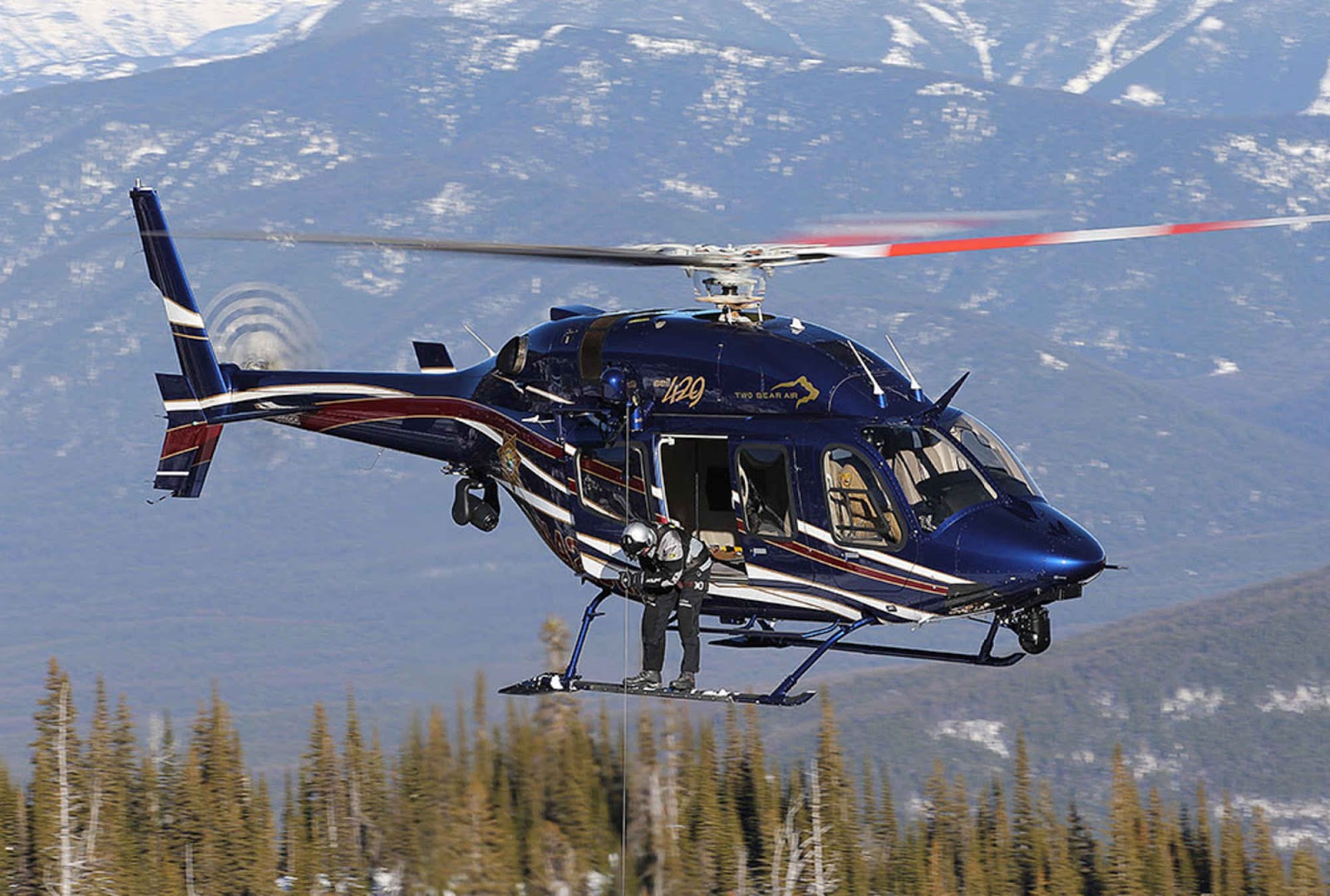


A new Forward Looking Infrared (FLIR) system, the FLIR 380-HD, can be added for $9,960, not including installation. The system is mounted under the nose of the Bell 429 and enhances vision at night or in low visibility conditions.


Another nice safety enhancement makes it easier for the occupants to find their way around the helicopter in case of an emergency. The Helicopter Emergency Egress Lighting System (HEELS) clearly identifies exits by adding LED light strips around the doors to allow occupants to find the exits quicker. The system is battery operated and engages automatically if the helicopter is immersed in water or experiences a force of 8G or more. The HEELS can also be turned on by the pilot. The kit costs $24,330.


Data recording capabilities have can been improved by adding the newly STC'd Micro QAR, which can be connected to the helicopter's flight data bus to record 320 hours of flight data onto a memory card. The data can be retrieved either by removing the memory card itself or through a built-in USB port. The Micro QAR costs $14,050.


A more extensive addition to the helicopter is a Fast Rope Kit, which allows operators to carry an additional 300 lbs of load per side externally. The $141,980 kit is comprised of telescoping tubes that extend and retract to allow for normal operation when they are not in use. The kit can also easily be attached or removed from the helicopter.


Operators can also add 25 lbs to the useful load of the helicopter through an STC that allows the operator to remove the co-pilot's seat. An additional STC allows for quick removal and reinstallation of the co-pilots tail rotor pedals. Removing the pedals during times when non-helicopter pilots occupy the seat enhances safety.


According: flyingmag.com

Mooney Launches Diesel-Powered M10 Two Seater

After weeks of rumors surrounding a possible new airplane design from Mooney International, the recently resurrected legacy airplane manufacturer announced at Airshow China 2014 in Zhuhai that it is developing a line of two-seat airplanes named the M10 series.

The new series will start out with the M10T and M10J models, both powered by Continental diesel engines. Both will also feature the same sleek composite fuselage design with the trademark forward canted vertical stabilizer that makes identifying Mooney airplanes easy.

The M10T is targeted at the global training market. It will have fixed gear and a 135 hp Continental CD-135 engine. The M10J will be the top of the line of the series with retractable gear, a 155 hp CD-155 engine, and greater creature comforts than its sibling. If Mooney can live up to the targeted 170 knot cruise speed and 1,000 nm range that it has set for the M10J, this airplane could be a game changer.

The M10 series will be marketed globally, with an emphasis on the Chinese training market. Mooney declined to provide pricing information, saying only the the models will be “competitive.” The Kerrville, Texas, company, which was bought earlier this year by Chinese investors, did not announce where the M10T and M10J will be built.

The M10 name recalls the original M10 Cadet of the 1960s and 1970s, and is a direct follow on to the M20 series, which has spanned more than half the alphabet with various sizes and power plants. The M20TN Acclaim Type S is the fastest single-engine airplane currently in production.

According: flyingmag.com

Bell 407GX

Despite the widespread adoption of Garmin’s integrated avionics systems in a variety of airplanes from four-place piston singles to turboprops and business jets, never before has the company’s G1000 glass cockpit flown in a helicopter.

The conventional wisdom has always seemed to argue against shoehorning Garmin’s wide LCD flight displays into the tight confines of a small, Part 27 helicopter. I had to admit as I waited in the parking lot outside Orlando, Florida’s Orange County Convention Center for the arrival of Bell’s newest helicopter, the Model 407GX featuring the helicopter version of G1000, that I harbored those same doubts. Did the pairing of a midrange, light single-engine helicopter with G1000 flat-panel displays, each measuring 10.4 inches diagonally, really make sense? Wouldn’t a slimmed-down alternative — say, Garmin’s G500 avionics system — be a better fit in the 407?

I didn’t have to ponder these questions for long before a gleaming brown-and-gold 407GX swooped over the grass field at the parking lot’s edge and squatted down next to me. I climbed aboard and introduced myself to Randall Parent, a Bell demonstration pilot, who set about giving me a quick and dirty briefing on the G1000H package arrayed before us. (The H stands for helicopter, naturally.) There wasn’t much to say since the magic of G1000 can truly be appreciated only once airborne. But at first glance the pairing of the Garmin glass with the 407 seemed promising.

As we were preparing to depart and get our demo under way, the radio crackled, signaling the arrival of another helicopter, which settled onto the grass beside us. “Have you had a ride in the Bell 429 yet?” Parent asked, glancing over at the 407GX’s larger, pricier sibling nestled next to us. I had not. “It’s nice, but that’s a Cadillac,” he said. “This,” he announced, tightening his grip on the collective, “is a Corvette.”

With that, Parent smoothly lifted us off the ground and into a hover a few feet above the large white H painted on the grass. “There,” he said, pressing a button on his cyclic stick. “How’s that?” A full-color video image showing the view from the rear of the helicopter popped onto the LCD screen in front of me. Easing the cyclic toward him with slight, almost imperceptible pressure, Parent backed the helicopter out of its space.

“That’s a reassuring picture,” I said, impressed by the clarity of the video image, which had far better fidelity than those minivan and SUV rearview cameras I’ve seen.

“That,” he said, “is the kind of technology we’ve incorporated into the 407GX that I’m convinced will save lives.”

Parent stepped on the left pedal to turn as only a helicopter can, pivoting 180 degrees. He eased the cyclic forward and we gathered momentum, wooshing across the empty field outside the site of this year’s Heli-Expo Convention. As Parent initiated a brisk climb over the restaurants and tourist attractions along International Drive, I thought to myself, Disney World may be nearby but I was already aboard my own personal amusement park ride.

Accelerating to 140 knots, the 407GX’s impressive top speed, Parent went straight to work showing off the G1000H’s capabilities.

“There’s one of our guys now,” he said, referring to another Bell 407 just returning from a customer demo flight. “I’ll put our nose on him so you can see the traffic alert on the synthetic-vision system.”

Parent banked left toward the small diamond-shaped target that blipped across the MFD. Immediately on the Garmin G1000H primary flight display, a similar target appeared on our virtual view of the world, exactly where it should have been. A digitized voice announced, “Traffic!”

“That’s pretty hard to ignore,” he said.

Indeed it was. In fact, every function and feature of the Garmin avionics system that Parent demonstrated during our half-hour flight seemed perfectly suited to the helicopter. Even the displays themselves appeared to fit the space as if they’d been designed that way when the Bell 407 made its debut back in 1995.

Match Made in Mirabel
I was especially interested to experience the terrain-alerting functionality in G1000, which Garmin originally developed for airplanes and tweaked for helicopter use. Because fixed-wing aircraft typically fly higher and faster than rotorcraft, they must be programmed with a different underlying logic. But here again, the G1000H cockpit excelled in every situation, even as Parent slowed the 407GX and put us into a steeper than normal descent toward a cluster of tall buildings. Had we been flying in an airplane, the system’s TAWS would have issued a warning almost as soon as the nose dipped. Instead, we were allowed to continue our plunge until reaching a height and distance where safety could have been in question in low visibility or if a pilot’s attention were temporarily diverted. The HTAWS, Parent explained, can be set to three sensitivity levels, including being inhibited altogether with the simple push of a button on the cyclic.

The G1000’s displays are large, to be sure, but it was surprising nonetheless to see how well the screens fit the 407GX’s reshaped instrument panel. Bell certified the original Model 407 with conventional instruments, and will continue selling the helicopter in this configuration to customers who wish to forego making the technological sidestep into the 21st century. Some buyers will opt to stick with round dials in the 407, perhaps owing to the fact that they may already operate a fleet of Bell helicopters and therefore will wish to maintain cross commonality. But if the reaction of buyers at Heli-Expo in March was any indication, the vast majority of customers will choose the Garmin glass panels. Bell said it signed contracts for 11 Bell 407GXs at the show, versus just three for 407s with conventional instruments, and says it has sold another 30 GX models to an unnamed fleet customer.

Possibly the biggest surprise about Bell’s decision to bring a version of the Garmin G1000 avionics system to the 407 is that no other manufacturer had yet chosen to do the same thing. Introduced nearly a decade ago in the Cessna Citation Mustang, Garmin avionics have become a de facto avionics standard in everything from Cessna Skyhawks to Embraer’s Phenom light jets and, with the introduction of the touch-screen-controlled G5000 cockpit, even the superfast Cessna Citation Ten business jet.

It’s a mystery why no other helicopter manufacturer realized G1000 would make a perfect companion for rotorcraft. Credit goes to Bell for being the first to figure it out, and for getting it exactly right in the 407GX.

According: flyingmag.com

Kaman Restarting K-MAX K-1200 Production


One of the strangest helicopters you have ever seen is going back into production. Following a 12-year hiatus, the Kaman K-MAX K-1200 heavy-lifter, first built in the 1990s, will again start emerging from the factory after the Connecticut-based manufacturer received an order for 10 helicopters from two operators.

First type certified in 1994, the K-MAX is unusual for its intermeshing twin main rotors, the same basic principle used in Charles Kaman's first prototype helicopter in 1947, the K-225.

Carrying a projected price in the neighborhood of $8 million, the K-MAX will relaunch with new deliveries in 2017. The customers are Rotex Helicopter of Switzerland and Helicopter Express of Chamblee, Georgia. The helicopters will be manufactured at Kaman's facilities in Jacksonville, Florida, and Bloomfield, Connecticut.

According: flyingmag.com

S-76 Rebirth


As an icy wind whipped from the Hudson River and buffeted the heliport's aluminum chain-link fence with an unrelenting ferocity, settling into the cockpit of a Sikorsky S-76 instead of some lesser machine made me stop and appreciate the size and power of one of the best-selling helicopters of all time.

"I'm a strong swimmer and might make it back to dry land," said the S-76 captain buckling in beside me, "but I doubt you could."

Those were the discomforting words offered as simple statement of fact masquerading as a "safety briefing" just in case we ended up in the frigid water on takeoff. I was about to get a demonstration of a new helicopter terrain and obstacle warning system in an older S-76B model, and the pilot was teasing, wasn't he?

Perfect, I thought.

Thank goodness for good, old-fashioned Pratt & Whitney reliability and the stellar safety record of the S-76, which rates significantly better than most other turbine-powered helicopters. Combine this with a roomy cabin, comfortable ride and 155-knot maximum cruising speed, and it's no wonder the model has succeeded as a mainstay of corporate, offshore oil and medevac fleets for more than three decades.

What Sikorsky designers didn't realize when they were developing the S-76 in the mid-1970s, of course, is that the model would still be a top choice of helicopter buyers more than 30 years later, thanks to a long list of improvements that have boosted the model's gross weight, useful load and range while bringing incremental advances to the cockpit and passenger compartment.

Now, with the introduction of the S-76D, featuring an all-glass integrated avionics suite (based on the one in the Airbus A380 super jumbo jet), dual-speed composite main rotor, additional fuel capacity, icing certification (a first for an S-76) and 1,077 shp Pratt & Whitney Canada PW210S turboshaft engines, Sikorsky appears on the verge of guaranteeing that the helicopter will remain relevant for decades to come.

First, though, the S-76D design team will need to cross the certification goal line. Development setbacks have delayed the helicopter's first delivery by four years to 2012. Sikorsky blames the wait on supply chain issues and unspecified design changes. The protracted development and lingering economic downturn have conspired to put the brakes on production of the current S-76, the C++ model, production of which stands at less than half of what it normally should be.

Sikorsky announced the S-76D in 2005 after completing an 18-month market study that uncovered a laundry list of design improvements customers said they wanted — many of which Sikorsky's competitors were already offering in their helicopters. The S-76D's launch also came two months after Sikorsky bought Keystone Helicopter, an engineering and completion specialist in Coatesville, Pennsylvania, the site of the S-76D final assembly line. The former Keystone operation is now fully integrated into the new Sikorsky Global Helicopters, but getting there took longer than expected, the company acknowledged.

Aero Vodochody of the Czech Republic — a former builder of military jet trainers and a longtime Sikorsky partner that has produced more than 250 S-76 airframes — is being tasked with manufacturing S-76D fuselages and delivering them to the Coatesville factory, where the rotors, engines and gearboxes will be fitted before customer completions and acceptance test flights. The first production S-76D fuselage arrived in Coatesville last November. That completed helicopter now joins two prototypes for the certification program, which is taking place at Sikorsky's flight test center in West Palm Beach, Florida, and in Coatesville. This triumvirate is forming the core of an accelerated test program expected to culminate with FAA certification by the end of the year. Assuming all goes according to plan, the first new helicopter will be delivered shortly afterward to Falcon Aviation Services, an air charter operator based in Abu Dhabi, United Arab Emirates, that has snapped up the first two S-76D delivery positions.

Technology Enhancements
Sikorsky has completed more than 300 hours of flight tests since the S-76D's first trip aloft in February 2009. The development program will involve about 800 hours of flying before the helicopter — and a massive amount of test data — are handed over to the FAA for validation flight-testing this summer.

While the S-76D sports a new look with the redesign of the helicopter's engine air inlet and aft cowls, the really big differences come from a compendium of new technologies packed into the model, all of it centered on improving performance, boosting efficiency, reducing noise and giving S-76D pilots better tools in the cockpit.

Sikorsky chose to scrap the mix of Rockwell Collins and Honeywell avionics in the S-76C++ and start fresh by partnering with Thales, a French company that also supplies avionics systems to helicopter makers Eurocopter and AgustaWestland. Dominating the S-76D's instrument panel are four large-format, flat-panel displays measuring 6 by 8 inches each, two integrated flight management systems, an electronic standby instrument and two beefy cursor-control devices mounted between the pilots on the center pedestal.

Unlike the various soft keys you might be used to in Garmin's G1000 or Avidyne's Entegra cockpits, the Thales TopDeck cockpit instead incorporates trackball controls that pilots use to access most any cockpit function, from setting the radios to calling up Nexrad weather images. Simplified drop-down menus ensure the pilots can access needed information as quickly as they can open a file on their PC.

TopDeck components take up less physical space in the cockpit, allowing Sikorsky designers to streamline the instrument panel and provide more legroom and better visibility, both of which should be welcomed improvements for pilots who complained they'd bang their knees in earlier S-76 models or they had trouble seeing over the glareshield. Ergonomic improvements aside, the ease of use and tremendous capability of the Thales suite should have pilots falling in love, designers say.

"The technology Thales has developed in the airline world for Airbus and the advanced integration of its avionics were really the two factors that led to our decision to go with the TopDeck cockpit," said Tim Fox, Sikorsky S-76D program manager. "Thales was able to offer features our customers said they wanted, such as advanced digital maps, integrated flight management systems and an architecture designed to keep the pilots' heads up and to present information so that typically they're no more than two mouse clicks away from any given function."

The Thales dual-channel digital autopilot in the S-76D will incorporate operating modes similar to those in the C++, in addition to a number of search-and-rescue modes offered as an option. One such mode, based on GPS input, lets the pilot press a button on the cyclic when directly over a rescue scene, such as a boat in trouble, and command the helicopter to fly a descent pattern putting it directly over that location in a hover at 50 feet — without the pilot ever having to touch the controls. This capability, Sikorsky stressed, will be included in a future TopDeck software load, probably about a year after initial certification, as will functionality more familiar to general aviation pilots such as GPS RNAV WAAS LPV approaches, XM satellite datalink weather and automatic dependent surveillance-broadcast (ADS-B).

Equally as important as what's being added in the cockpit are the improvements on the outside, and nowhere are the changes more apparent than atop the helicopter. The S-76D incorporates all-new composite main rotor blades with a wider chord and swept tips, enabling the use of less power to yield the same performance. The S-76D's introduction will also mark a switch to Pratt & Whitney Canada power after a 15-year hiatus, during which S-76 models have rolled off the production line with Turbomeca Arriel-series engines. The new main rotor blades enable the S-76D to lift about 500 pounds more than the C++ model does, though Sikorsky has decided against increasing the helicopter's maximum takeoff weight, currently 11,700 pounds, choosing instead to focus on performance improvements in challenging operating environments.

"Our customers told us they wanted more power to be able to operate higher and hotter, so rather than increasing the max gross weight, we went after the ability to operate the helicopter in a wider range of environments," Fox said. "The S-76D has more power than the S-76B and better fuel efficiency than the S-76C, so the engine change is bringing extra power to the helicopter in a very economical platform."

For pilots concerned about the structural integrity of the composite rotor blades, Sikorsky describes them as being "flaw tolerant," meaning that if cracks begin to form, they do so in a controlled way — in other words, when the rotor blades start to fail, they shouldn't tear apart in flight with potentially catastrophic consequences. Don't worry, though: The chance of the rotor blades developing cracks in the first place is said to be between slim and none.

The improved rotor design substantially reduces noise, to the point that Sikorsky has set a goal of marketing the S-76D as the quietest helicopter in its weight class. More flight-testing is needed before Sikorsky can make that claim, but designers promise the S-76D will exceed the Grand Canyon National Park standard — the world's strictest noise rule. Indeed, when the S-76C+ chase aircraft is heard flying overhead followed by an S-76D test helicopter, the difference is obvious. The S-76D's main rotor actually operates with lower lift, while the tail rotor, thanks to a number of design changes that allow it to rotate more slowly, essentially has disappeared from the noise signature.

The S-76D also incorporates rotor icing-protection technology borrowed from the larger S-92. The system uses electric heater mats embedded within the main rotor blades to shed ice automatically without pilot input — something you'd probably love to have on the wing and tail surfaces of your airplane. Sikorsky expects the S-76D to gain certification for flight into known icing after the full regimen of winter flight-testing is completed in early 2013.

Another improvement to the S-76D is the introduction of an automatic dual-rpm main rotor that switches from high to low speed based on a set of predetermined airspeed and altitude criteria. You can think of it sort of like the single-lever power in a Cirrus that adjusts throttle and propeller rpm simultaneously. The S-76D rotor operates in high-speed mode during takeoff and automatically transitions to low-speed mode when crossing certain altitude and airspeed thresholds, squeezing more range and reducing noise in cruise flight. The opposite happens when transitioning from cruise to approach and landing. Pilots and passengers — as well as people on the ground — can tell when the change occurs by the difference in sound, but there is no obvious performance difference, Fox noted.

S-76 Lineage
To create the S-76 Spirit (unveiled in 1976 and named in honor of the U.S. bicentennial), Sikorsky took the main rotor of the UH-60 Black Hawk and mated it to a streamlined composite fuselage that still allowed it to offer a large passenger compartment and baggage area. Designers then added a retractable tricycle landing gear and two 650 shp Allison 250-C30 engines. The prototype flew for the first time on March 13, 1977, and, designated the S-76A, found a ready home with scores of corporations, offshore oil operators and others during an initial production run that included 284 helicopters. The first S-76 customer delivery was made to Air Logistics of Lafayette, Louisiana, on Feb. 27, 1979.

Sikorsky sold a handful of special-order A+ models with Turbomeca Arriel 1S engines and A++ helicopters with Arriel 1S1 engines, while also introducing the baseline S-76 Mk II in 1982 with a more powerful version of the Allison 250 engine. The company then introduced the P&WC-powered S-76B in 1985, which quickly became a favorite choice of blue-chip companies in the Northeast, especially around New York City. The introduction of the S-76C in 1991 marked the addition of the Arriel 1S1 to the production line, which was later replaced by the Arriel 2S1 in the C+, and finally the Arriel 2S2 in the C++. Sikorsky built S-76B and S-76C/C+ models concurrently from 1991 to 1997. (In case you're wondering, Sikorsky chose to add plus signs to S-76 models that primarily featured only an engine change, reserving new letter designations for major upgrades to the line.)

As an interesting aside, while it's true that a number of Sikorsky models have been introduced in the years that correspond with their model numbers (for example, the S-61 in 1961, S-76 in 1976 and S-92 in 1992), there are many more examples in Sikorsky's history in which the naming convention fits a serial pattern rather than a year. The Sikorsky S-47, the world's first production helicopter, for instance, was introduced in 1940; the S-58 debuted in 1954; the S-70 (the civil version of the Black Hawk) first flew in 1974; and Sikorsky's newest helicopter, the S-97, a proposed high-speed light attack/scout helicopter based on the X2 high-speed twin-coaxial-rotor demonstrator, was unveiled in October 2010.

According: flyingmag.com

Enstrom's Helicopter Trainer Progresses


Enstrom Helicopters announced that the flight test program for its two-seat TH180, currently in development, is progressing on schedule with the second prototype building flight hours. "We are into the envelope expansion phase," said Enstrom test pilot Bill Taylor. "We've had it out over 90 knots so far, and everything is performing as expected."

A third, fully conforming prototype is currently being built at the factory in Menominee, Michigan. That airframe is expected to take to the skies later this year.

Powered by a Lycoming HIO-390 engine, the $365,000 TH180 is designed for ease of maintenance and low cost of operation, Enstrom said. While the panel options have yet to be announced, Enstrom's director of sales, Orlando Alaniz, promises "modern avionics." The helicopter will also be equipped with digital engine instrumentation and an electronic throttle governor, Alaniz said.

Enstrom announced the TH180 program at the Helicopter Association International's Heli-Expo in 2014. The helicopter was designed as a training platform and several ab-initio training operators have signed up as customers. However, Enstrom said customers who plan to use the helicopter for light commercial and private use have also signed memorandums of understanding for the TH180.

Certification is on track to be complete sometime next year, Enstrom said.

According: flyingmag.com

Sikorsky S-76D VIP Helicopter


Here is the opening text from the official S-76D brochure: 
“The large, comfortable and quiet cabin has been refined to meet the exacting needs of the Fortune 500 business traveler. It can be configured to meet your personal requirements, as an extension of your office to add to your productivity. The S-76® helicopter’s strengths include low internal acoustic levels and a smooth ride.

Sikorsky’s active vibration control and Quiet Zone™ transmission technology assures that your flight is extraordinarily smooth and pleasantly quiet. The acoustically enhanced environment of the cabin allows you to conduct business conversations or just relax and enjoy the flight. Sikorsky can schedule a demonstration flight at your convenience, allowing you to personally experience the smoothest and quietest executive helicopter for yourself.
While the S-76D™ helicopter is quiet inside, your neighbors will also appreciate that it’s quieter outside as well. In this version,Sikorsky introduces a cutting edge technology quiet tail rotor, improved main rotor blades and an innovative rotor system that will alter its rotor speed in flight for reduced acoustic levels. The combined effect of these technologies results in a helicopter that meets the most stringent proposed noise standards.”

Points to interest the owner:

  • The S76C++ is the Queen’s helicopter. The S76-D is where the program has gone. 
  • Safest in its class. Millions of flight hours with the S76 airframe.
  • S92 and Commanche material technologies introduced into the S76-D model.
  • Best range cruise speed now increased to 154knots from 137knots.
  • Interior noise levels very good .
  • Sixty S-76D’s sold to date.
  • Approx. $16m depending on configuration.

Points to interest the pilot and yacht captain.

  • Blade folding is available for superyacht storage.
  • New power plants introduced the PW210 from Pratt & Whitney.
  • Fuel efficiency has improved. 14-15% increase in power for 8% less fuel. 
  • Improved range and one-engine inoperable performance.
  • Exterior noise significantly reduced by redesigning the tail rotor; swept tip wider chord, slower rotation reducing noise and also allowing power to be diverted to the main rotor. 
  • Achieves “Grand Canyon” exterior noise acceptance levels.
  • Integrated cockpit environment makes aircrew screen management easier, giving reduced workload reduced and safer flying.
  • Confined area vertical profiles achieved due to power reserves associated with operation.
  • RIPS Rotor Ice protection system allowing flights into known icing conditions possible. First season testing as a kit for S-76D (end 2015 certification: already certified for the S-92). 
  • Russia will have the S-92 certified first in Russia and the S-76D thereafter.

Points to interest the maintenance team:

  • HUMS Health Usage Monitoring System available on all individual aircraft provide data to Sikorsky Engineering which is then compared against a global fleet of the type looking for discrepancies. Actual happenings and predictive mode looking at possible failures. 
  • Field service rep dedicated to a customer.
  • Spare engines located in Europe (Southampton, UK) to be allocated as required to keep a machine flying. 
  • EASA validation of FAA certification scheduled for July 2014.
  • First offshore D’s operating for BP and REPSOL in Caribbean.

My summary:
The Sikorsky S-76D is a very impressive aircraft for VIPs who make frequent use of their helicopter and want an aircraft that is made to the highest specification. The quiet operation and executive configuration make this a luxurious and hard working helicopter. From a pilot perspective, the cockpit is very well laid out and there are numerous features which increase safety. From a maintenance perspective, Sikorsky quality and their spares network mean the aircraft will have maximum availability. The aircraft is suitable for heliyacht operations, but I would need to consult with the owner about the suitability of a particular superyacht’s helicopter infrastructure to accommodate this aircraft.

 According: Nigel Watson

Comments system

Disqus Shortname